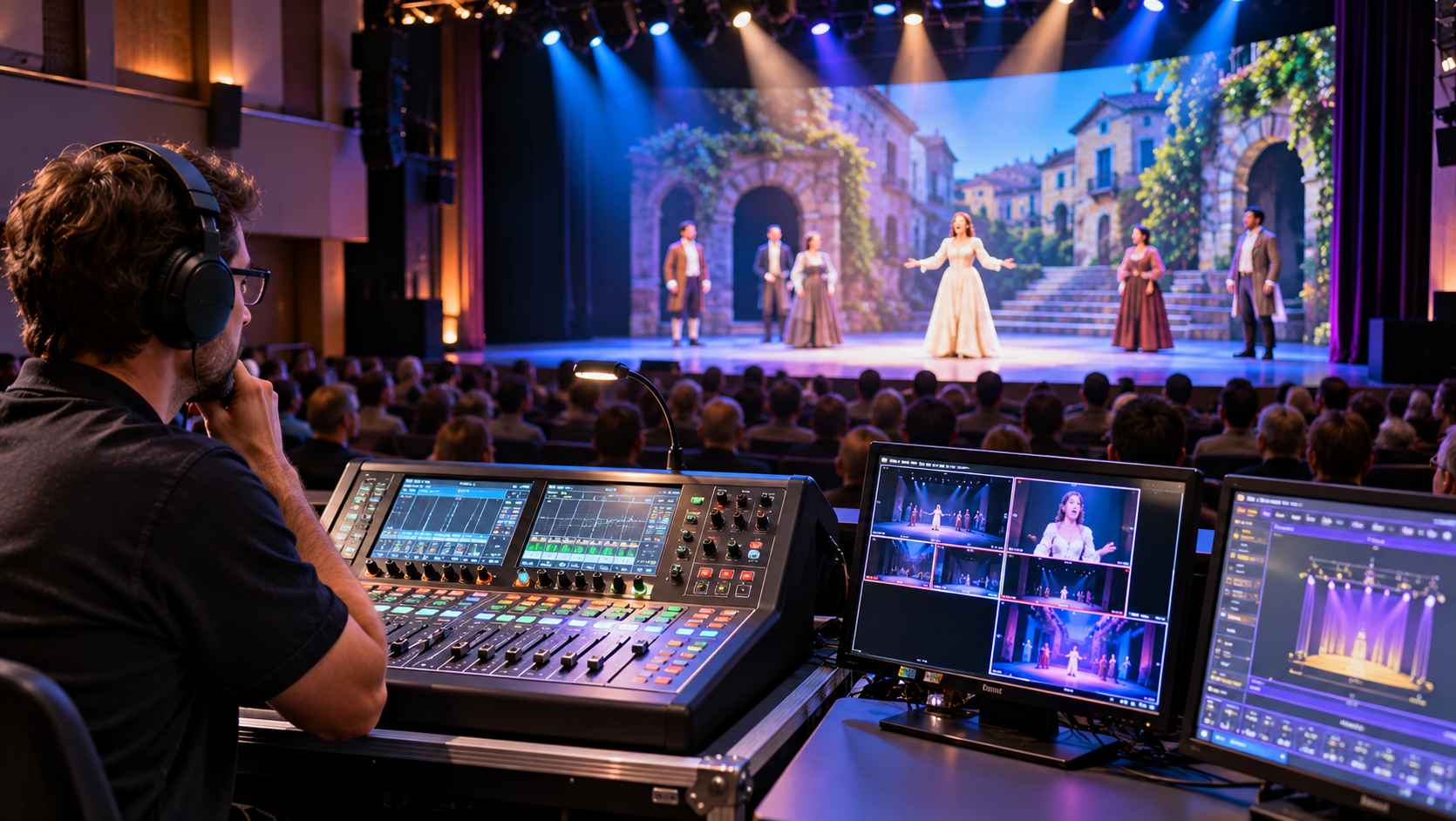
The moment the lights dim and a performance begins, audiences become part of an experience shaped by more than the performers on stage. Sound, lighting, visual effects, and the surrounding environment all influence how a production is experienced.
Whether it is an opera, theatrical production, musical concert, or community performance, audiovisual technology plays an important role in helping audiences hear, see, and connect with what is happening.
Clear dialogue, balanced music, thoughtful lighting, and well-integrated visual displays can support storytelling without distracting from the performers.
For theatre operators, event organizers, and performing arts organizations, understanding how audiovisual systems work together can help create more dependable technical environments and engaging audience experiences.
Why Sound Clarity Matters in Live Performances
Sound clarity is essential in performance environments because audiences need to understand dialogue, lyrics, and musical details.
In a theatrical production, unclear speech can make it difficult to follow the story. During a musical performance, poorly balanced audio may cause certain instruments or voices to overpower others.
However, producing clear sound involves more than increasing the volume.
Room acoustics, speaker placement, microphone selection, and mixing decisions all influence how sound reaches the audience.
For example, a small theatre with reflective walls may experience sound reflections that make dialogue less distinct.
A larger performance space may require careful planning to provide appropriate sound coverage across different seating areas.
Understanding these conditions helps venues select equipment and arrangements suited to their specific needs.
How Microphones Support Performers and Presenters
Microphones allow voices and instruments to be amplified or recorded when appropriate.
Different performance situations require different microphone arrangements.
A theatrical production involving frequent movement may benefit from suitable wireless microphones, while a musical performance might use microphones positioned for particular instruments.
However, microphone selection should reflect the production’s artistic and technical requirements.
In opera and other acoustic performances, amplification may be limited or unnecessary depending on the venue and production.
Microphone placement also matters.
An unsuitable position may capture unwanted background noise or create challenges with sound balance.
Technical teams should consider performer movement, stage layout, and the intended listening experience when selecting microphone systems.
The Importance of Speakers and Mixing Systems
Speakers distribute amplified sound throughout a venue, while mixing systems allow technicians to manage different audio sources.
During a live musical production, a sound engineer may need to balance microphones, instruments, recorded audio, and other sound elements.
A mixing console provides control over levels and other audio parameters.
However, even a capable mixing system cannot compensate for every problem caused by unsuitable speaker placement or challenging room acoustics.
Professional audio and video installation solutions can be valuable when organizations are planning permanent sound systems and integrated audiovisual equipment for performance spaces.
The objective should be to select equipment that supports the venue’s requirements rather than assuming that a larger or more expensive system will automatically provide better sound.
Why Balanced Sound Levels Matter Across a Venue
Audience members should have a reasonable opportunity to hear performances clearly regardless of where they are seated.
However, sound levels can vary throughout a venue depending on room dimensions, speaker positioning, and acoustic conditions.
Someone seated close to a speaker may experience a different sound balance from a listener near the back of the room.
Balancing sound coverage requires considering the intended audience areas.
Speaker Positioning
Appropriate placement can help direct sound toward listening areas while reducing unnecessary reflections.
Volume Management
Sound should be loud enough for appropriate clarity without creating excessive listening levels.
System Testing
Testing from different audience positions can help technical teams identify uneven coverage or areas where dialogue becomes difficult to understand.
These considerations are especially important in multipurpose venues that host different types of performances.
How Room Acoustics Influence Live Sound
Every performance space has unique acoustic characteristics.
Wall materials, ceiling height, seating arrangements, flooring, and architectural features can influence how sound behaves.
In some theatres, natural reverberation contributes positively to musical performances.
In other settings, excessive reflections may reduce speech clarity.
Acoustic treatment can help address particular challenges, but the appropriate approach depends on the intended use of the venue.
For example, a space primarily hosting spoken theatre may have different acoustic priorities from a hall designed for unamplified orchestral music.
The Audio Engineering Society professional resources provide information related to audio engineering, sound reproduction, and technical practices.
Understanding fundamental acoustic principles can help venues make more informed decisions about equipment and room design.
How Projection and Visual Displays Enhance Storytelling
Visual technology can extend the creative possibilities of live performance.
Projection systems, digital displays, and multimedia elements may be used to establish settings, communicate information, or support artistic expression.
For example, a theatrical production might use projected scenery to suggest changes in location without requiring extensive physical set adjustments.
A concert may incorporate visual backgrounds that complement the music.
Community performances may also benefit from displays showing announcements, programme information, or captions.
However, visual technology should serve the production rather than distract from it.
Screen placement, image brightness, viewing angles, and coordination with stage lighting all influence how effectively visual elements are presented.
Why Lighting and Audiovisual Technology Should Work Together
Lighting is an essential part of the atmosphere in live performances.
It directs attention, establishes mood, and helps audiences understand changes in the production.
However, lighting choices can also affect audiovisual systems.
Bright stage lights may reduce the visibility of projected images, while poorly positioned displays may interfere with sightlines.
Audio equipment, projection systems, and lighting fixtures may also compete for limited installation space.
Coordinating these elements during planning can help avoid unnecessary conflicts.
For example, a venue preparing a multimedia theatrical production should consider where projectors, speakers, lighting fixtures, and control equipment will be positioned.
A coordinated technical approach supports both creative flexibility and practical operation.
Planning Technology for Different Venue Sizes
A small community theatre has different technical requirements from a large concert hall.
Smaller venues may prioritize straightforward equipment arrangements that can be operated by a limited technical team.
Larger spaces may require more extensive sound distribution, multiple display positions, and additional control capabilities.
Multipurpose venues introduce further challenges because the room may accommodate concerts, meetings, theatrical productions, and presentations.
Equipment should be selected according to the activities the venue actually hosts.
For example, a community hall may benefit from a flexible microphone system and straightforward presentation controls.
A dedicated theatre may require more specialized technical planning.
Understanding the venue’s intended uses is more valuable than selecting equipment solely based on advertised features.
Supporting Rehearsals and Technical Preparation
Rehearsals provide opportunities to identify audiovisual challenges before audiences arrive.
Performers and technical teams can use this time to test microphone arrangements, audio cues, projection timing, and lighting transitions.
For example, a recorded sound effect may need adjustment if it interferes with spoken dialogue.
A projected background may require repositioning to remain visible from different seating locations.
Technical rehearsals also help performers become familiar with equipment and stage conditions.
Clear communication between directors, performers, stage managers, and audiovisual technicians is important.
Not every issue can be anticipated, but preparation provides opportunities to address practical concerns before a live performance begins.
Why Reliable AV Installation Matters
Permanent audiovisual systems should be designed with the venue’s physical conditions and operational requirements in mind.
Equipment compatibility, wiring, control systems, ventilation, and maintenance access all deserve consideration.
A system that is difficult to operate may create unnecessary challenges for staff and volunteers.
Professional installation planning can help organizations identify suitable equipment arrangements and understand technical limitations.
For venue operators in Ottawa and surrounding areas, Signature Audio Video provides audio/video equipment and integration solutions.
Organizations considering technical improvements should explain their intended uses, existing equipment, and installation requirements before selecting a provider.
Specialized live production or acoustic engineering needs may require additional expertise beyond general audiovisual installation.
Practical Considerations for Performance Venues
Before investing in new technology, theatre operators and event organizers can review several important factors:
- Identify performance requirements: Consider whether the venue primarily hosts theatre, music, presentations, or mixed events.
- Evaluate room acoustics: Recognize how the space influences clarity and sound distribution.
- Review audience visibility: Ensure displays and stage elements can be viewed from intended seating areas.
- Consider equipment compatibility: Confirm that audio, video, and control components can work together.
- Plan technical access: Allow appropriate space for maintenance, operation, and future adjustments.
- Schedule testing: Evaluate audiovisual systems under realistic performance conditions.
These steps can help organizations prioritize improvements without assuming that every venue requires extensive upgrades.
Conclusion: Technology Should Support the Performance
Memorable live performances depend on the connection between performers, audiences, and the surrounding environment.
Sound systems, microphones, mixing equipment, lighting, and visual displays can all contribute to that experience when they are planned thoughtfully.
However, technology should complement artistic expression rather than compete with it.
Understanding room acoustics, balancing sound coverage, coordinating technical systems, and preparing through rehearsals can help venues create more dependable performance environments.
For theatres, community arts organizations, and event operators, careful audiovisual planning is an important part of supporting creative work.
Ultimately, the purpose of performance technology is not to draw attention to the equipment itself. It is to help audiences experience the music, dialogue, movement, and storytelling that make live performances meaningful.